
What It Is
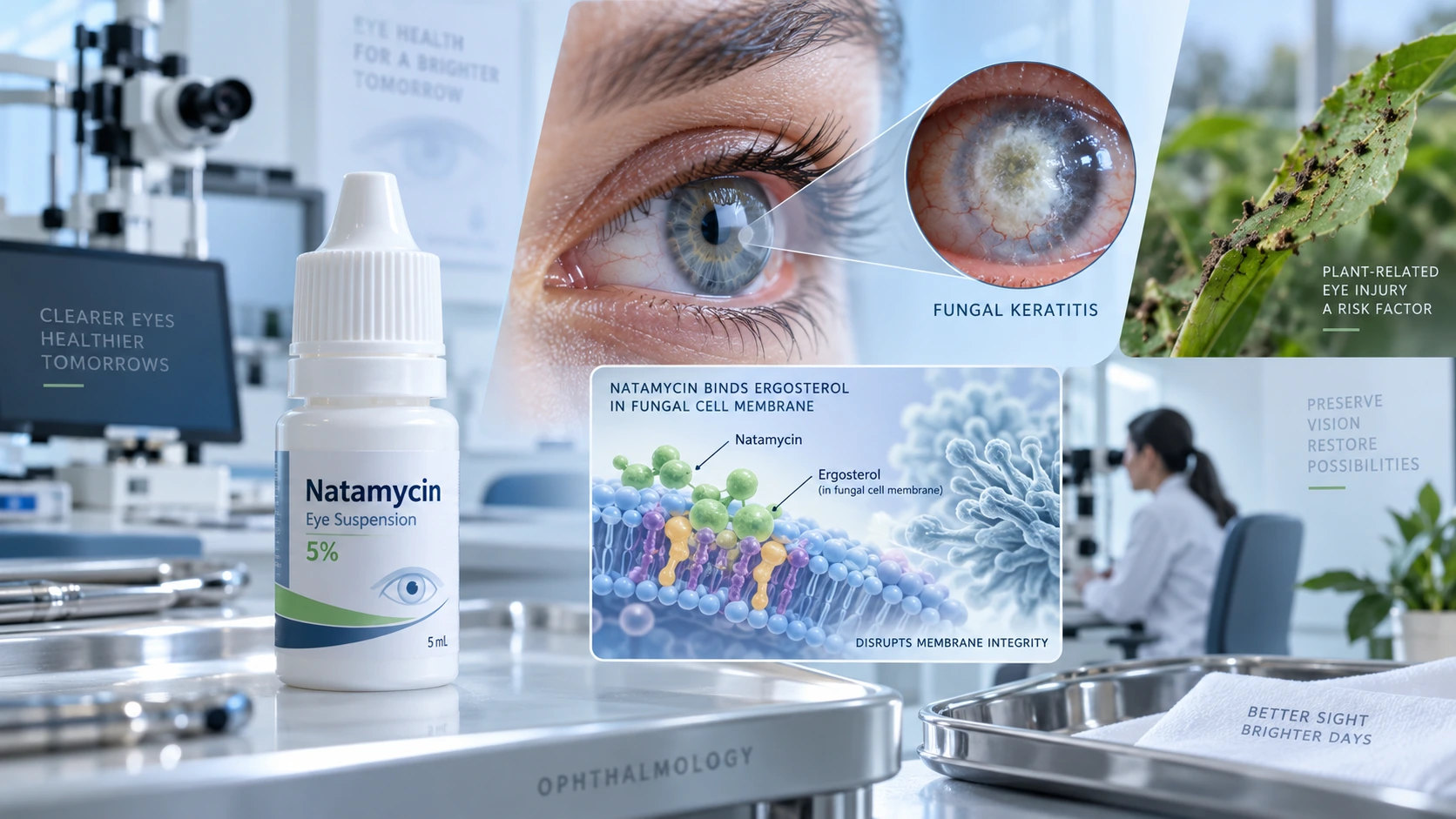
Natamycin belongs to a class of medicines called polyene antifungals. It is used as an eye suspension, usually a 5% eye drop, and is also available in some countries as a cream or lozenge.
What It's Used For
Natamycin is generally used to treat fungal infections of the eye, especially fungal keratitis, an infection of the cornea. Fungal keratitis is a leading cause of corneal ulcers and vision loss in tropical regions, including India, and often follows an eye injury involving plant material. Treatment is given under an eye specialist's supervision, often for several weeks.
How It Works
Natamycin binds to ergosterol, a key component of the fungal cell membrane, and stops the membrane from working properly. This blocks the growth of the fungus. Because it is poorly absorbed from the eye and the body, it is used only as a local treatment.
History and Regulatory Status
Natamycin was isolated in 1955 from the soil bacterium Streptomyces natalensis, found in South Africa. It is one of the few antifungal eye preparations available for fungal keratitis and is a prescription medicine. It is also used in the food industry as a preservative on cheese and cured meats.