
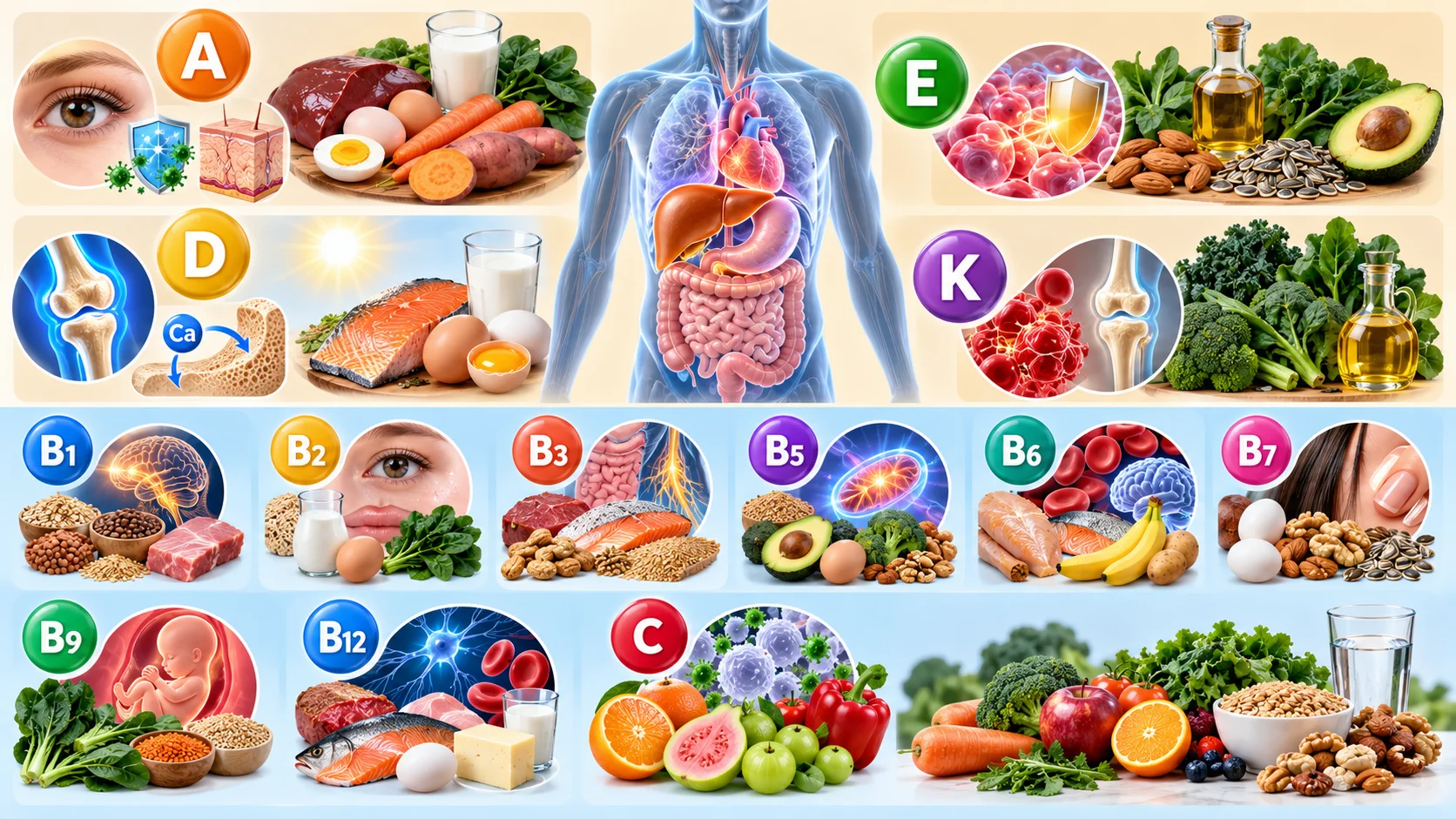
Vitamins are nutrients the body needs in small amounts to work properly. Most cannot be made by the body, so they must come from food (or supplements when needed). There are 13 essential vitamins, divided into two groups.
Fat-Soluble Vitamins (A, D, E, K)
These dissolve in fat and are stored in the liver and fatty tissue. Because they build up in the body, taking too much through supplements can be harmful.
Vitamin A (retinol)
- Main functions: Vision, immunity, healthy skin
- Good sources: Liver, eggs, milk, carrots, sweet potatoes, spinach
- Deficiency signs: Night blindness, dry eyes, frequent infections
Vitamin D (calciferol)
- Main functions: Absorbs calcium, builds strong bones
- Good sources: Sunlight, oily fish, egg yolk, fortified milk
- Deficiency signs: Rickets in children, soft or weak bones in adults
Vitamin E (tocopherol)
- Main functions: Antioxidant, protects cells
- Good sources: Nuts, seeds, vegetable oils, green vegetables
- Deficiency signs: Rare; nerve and muscle problems
Vitamin K
- Main functions: Blood clotting, bone health
- Good sources: Leafy greens, broccoli, vegetable oils
- Deficiency signs: Easy bruising, excessive bleeding
Water-Soluble Vitamins (B group and C)
These dissolve in water and are not stored in large amounts. Extra is usually passed out in urine, so they need to be taken in regularly through diet.
Vitamin B1 (thiamine)
- Main functions: Turns food into energy, nerve function
- Good sources: Whole grains, pulses, pork, nuts
- Deficiency signs: Beriberi, fatigue, nerve damage
Vitamin B2 (riboflavin)
- Main functions: Energy production, healthy skin and eyes
- Good sources: Milk, eggs, meat, green vegetables
- Deficiency signs: Cracked lips, sore tongue
Vitamin B3 (niacin)
- Main functions: Energy, skin and nerve health
- Good sources: Meat, fish, peanuts, whole grains
- Deficiency signs: Pellagra (skin rash, diarrhoea, confusion)
Vitamin B5 (pantothenic acid)
- Main functions: Energy and hormone production
- Good sources: Found in most foods
- Deficiency signs: Very rare
Vitamin B6 (pyridoxine)
- Main functions: Protein use, red blood cells, brain function
- Good sources: Chicken, fish, bananas, potatoes
- Deficiency signs: Anaemia, confusion, sore mouth
Vitamin B7 (biotin)
- Main functions: Metabolism, hair and nail health
- Good sources: Eggs, nuts, seeds
- Deficiency signs: Hair thinning, skin rash
Vitamin B9 (folate / folic acid)
- Main functions: Cell growth, red blood cells, baby's development in pregnancy
- Good sources: Leafy greens, lentils, fortified cereals
- Deficiency signs: Anaemia; birth defects of the spine and brain
Vitamin B12 (cobalamin)
- Main functions: Red blood cells, nerve function
- Good sources: Meat, fish, eggs, dairy
- Deficiency signs: Anaemia, tiredness, numbness, memory problems
Vitamin C (ascorbic acid)
- Main functions: Immunity, wound healing, iron absorption
- Good sources: Citrus fruits, amla, guava, tomatoes, peppers
- Deficiency signs: Scurvy, bleeding gums, slow wound healing
Key Points to Remember
- A balanced diet with fruits, vegetables, whole grains, pulses, and protein foods provides most vitamins for most people.
- Vitamin B12 is found mainly in animal foods, so strict vegetarians and vegans may need supplements or fortified foods.
- Folic acid is recommended for women planning pregnancy and in early pregnancy to prevent birth defects.
- Vitamin D deficiency is common even in sunny countries, especially in people who stay indoors or cover most of their skin.
- More is not always better. High doses of vitamins A and D can be toxic, and too much B6 can damage nerves.
- Cooking affects vitamins. B vitamins and vitamin C can be lost when food is boiled for a long time; steaming or light cooking helps preserve them.
- Supplements should ideally be taken on the advice of a doctor, especially by pregnant women, children, older adults, and people with long-term illnesses.