
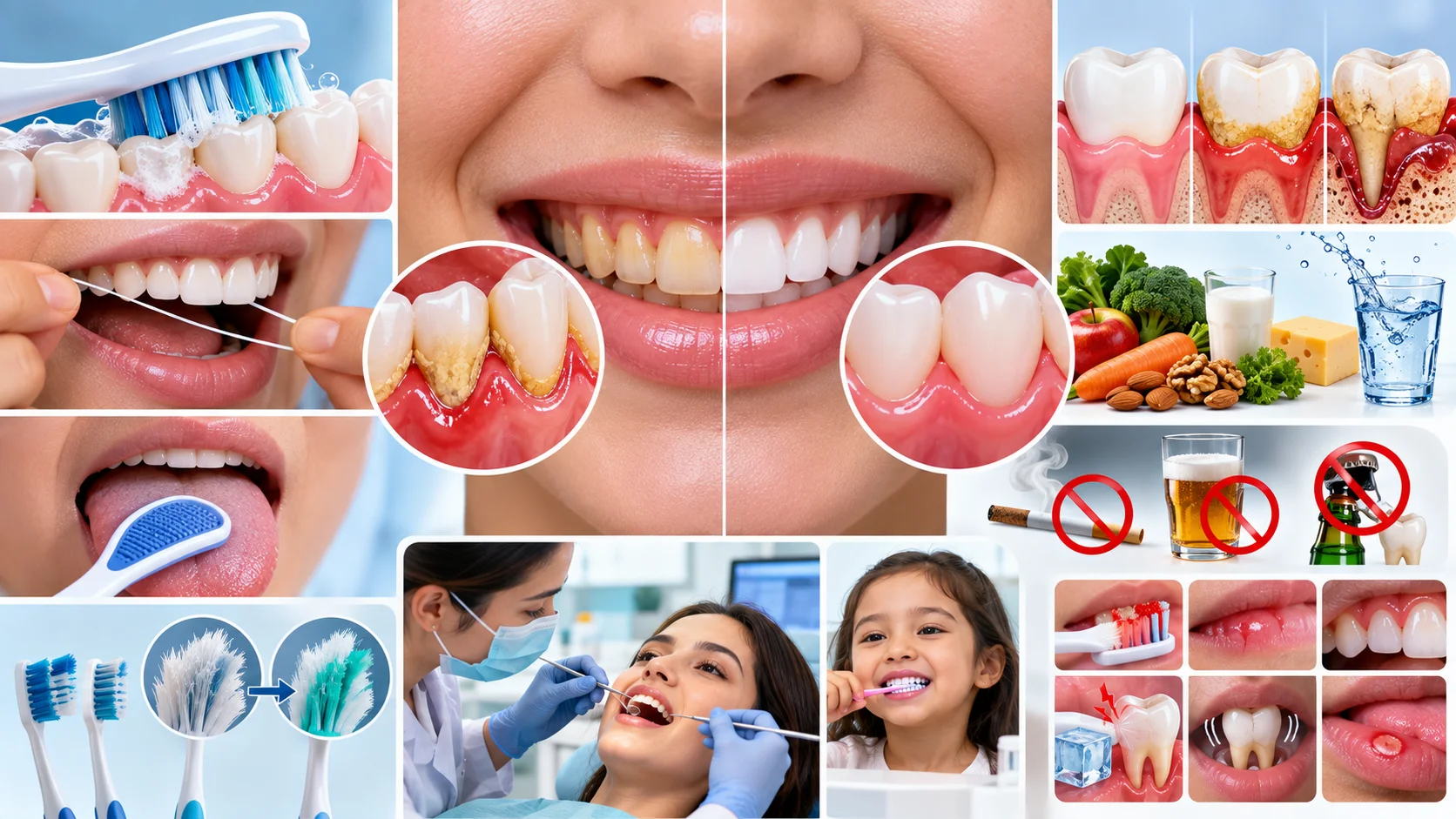
Oral hygiene means keeping your mouth, teeth, and gums clean. Good habits protect against tooth decay, gum disease, and bad breath. They also support your overall health, because problems in the mouth can affect the rest of the body.
Why It Matters
Every day, a sticky layer of bacteria called plaque forms on your teeth. When you eat sugary or starchy foods, these bacteria make acids that attack tooth enamel. Over time, this causes cavities (holes in the teeth).
If plaque is not removed, it hardens into tartar, which only a dentist can clean off. Plaque and tartar near the gumline can cause gum disease. Early gum disease (gingivitis) makes gums red, swollen, and prone to bleeding. If left untreated, it can lead to loose teeth and tooth loss.
Research has also linked poor oral health to heart disease, diabetes complications, and problems during pregnancy.
Daily Habits for a Healthy Mouth
- Brush twice a day. Brush in the morning and before bed for about two minutes each time. Use a soft-bristled toothbrush and a fluoride toothpaste. Hold the brush at a slight angle to the gums and use gentle, circular movements. Clean the front, back, and chewing surfaces of every tooth.
- Clean between your teeth once a day. A toothbrush cannot reach the spaces between teeth. Use dental floss, interdental brushes, or a water flosser to remove food and plaque from these areas.
- Don't forget your tongue. Bacteria collect on the tongue and can cause bad breath. Brush your tongue gently or use a tongue scraper.
- Replace your toothbrush regularly. Change it every three to four months, or sooner if the bristles look worn or frayed.
- Spit, don't rinse. After brushing, spit out the extra toothpaste but avoid rinsing with water straight away. This lets the fluoride keep protecting your teeth.
Eat and Drink Wisely
- Limit sugary foods and drinks, especially between meals.
- Drink plenty of water, particularly after meals.
- Eat fruits, vegetables, dairy products, and nuts, which support healthy teeth.
- Chewing sugar-free gum after meals can help produce saliva, which naturally cleans the mouth.
Avoid Harmful Habits
Smoking and chewing tobacco stain teeth, cause bad breath, and greatly increase the risk of gum disease and mouth cancer. Heavy alcohol use also harms oral health. Avoid using your teeth to open bottles or packets, as this can crack or chip them.
Visit Your Dentist
See a dentist for a check-up and professional cleaning every six months, or as your dentist advises. Regular visits help catch problems early, when they are easier and cheaper to treat.
Warning Signs to Watch For
Visit a dentist if you notice:
- Gums that bleed when you brush or floss
- Red, swollen, or receding gums
- Bad breath that does not go away
- Tooth pain or sensitivity to hot and cold
- Loose teeth
- Sores or patches in the mouth that do not heal within two weeks
Oral Care for Children
Start cleaning a baby's gums with a soft, damp cloth even before teeth appear. Once teeth come in, brush them twice a day with a small smear of fluoride toothpaste (about the size of a grain of rice) for children under three, and a pea-sized amount for ages three to six. Supervise children's brushing until they are about seven or eight years old.
The Bottom Line
Healthy teeth and gums come from simple daily habits: brush twice a day, clean between your teeth, eat a balanced diet, avoid tobacco, and see your dentist regularly. A few minutes of care each day can keep your smile healthy for life.