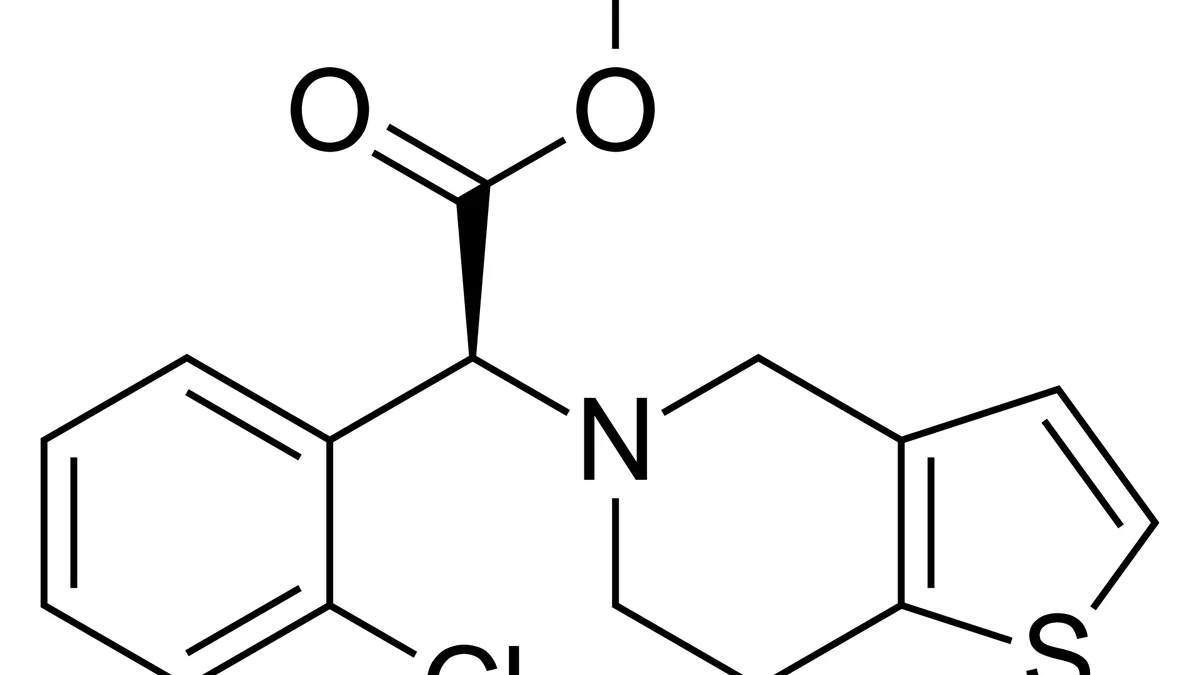
What It Is
Clopidogrel belongs to a class of medicines called antiplatelet agents, used to reduce the tendency of platelets, small blood cell fragments, to clump together and form clots.
What It's Used For
Clopidogrel is generally used to help prevent blood clots in people at elevated risk, commonly following a heart attack, stroke, or the placement of a stent in a blood vessel.
How It Works
Clopidogrel works by blocking a specific receptor on the surface of platelets that normally responds to a substance involved in triggering platelets to clump together and activate other platelets nearby. By blocking this receptor, clopidogrel reduces platelets' ability to aggregate, or stick together, lowering the likelihood of clot formation, particularly in blood vessels affected by narrowing or previous injury, such as after a stent has been placed.
History and Regulatory Status
Clopidogrel was developed by a French pharmaceutical company and was introduced for clinical use in the late 1990s, building on research into an earlier antiplatelet medicine in the same general chemical family. It was notable for offering an effective antiplatelet option with a different side effect profile compared to some earlier medicines used for similar purposes. Following the expiration of its patent protection in the late 2000s to 2010s depending on the country, it became widely available as a generic medicine, and it remains one of the most commonly prescribed antiplatelet medicines worldwide.