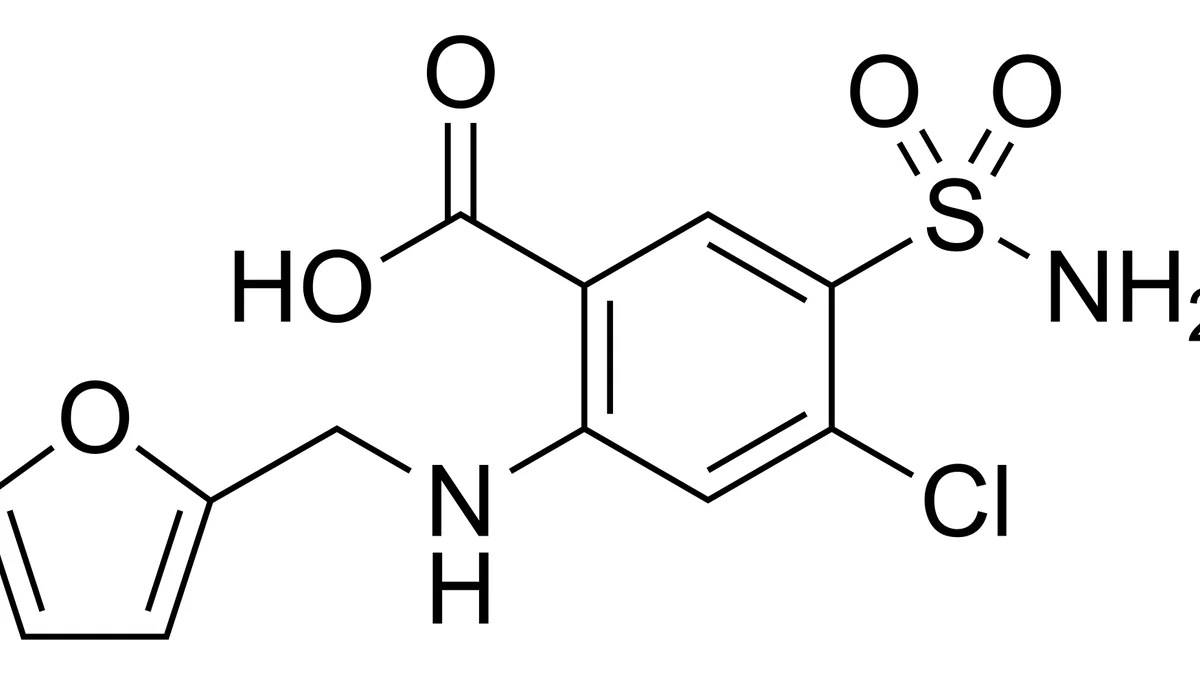
What It Is
Furosemide belongs to a class of medicines called loop diuretics, a group known for producing a relatively strong and fast effect on fluid elimination compared to other diuretic classes.
What It's Used For
Furosemide is generally used to help reduce excess fluid buildup in the body, a condition sometimes associated with heart, kidney, or liver conditions, and is also used to help manage high blood pressure in certain cases.
How It Works
Furosemide works within a specific part of the kidney's filtering structure called the loop of Henle, where it blocks the reabsorption of sodium and chloride back into the bloodstream. Because water follows sodium through natural physiological processes, blocking this reabsorption causes more sodium, chloride, and water to remain in the urine and be eliminated from the body, reducing overall fluid volume.
History and Regulatory Status
Furosemide was developed by a German pharmaceutical company in the late 1950s and early 1960s, as part of research into new diuretic compounds. It was introduced for clinical use in the early 1960s and became notable for its potency and rapid onset of action compared to diuretic medicines available at the time. It has remained a standard treatment option for managing fluid overload for decades since its introduction and is included on the World Health Organization's list of essential medicines, widely available today as a generic prescription medicine.