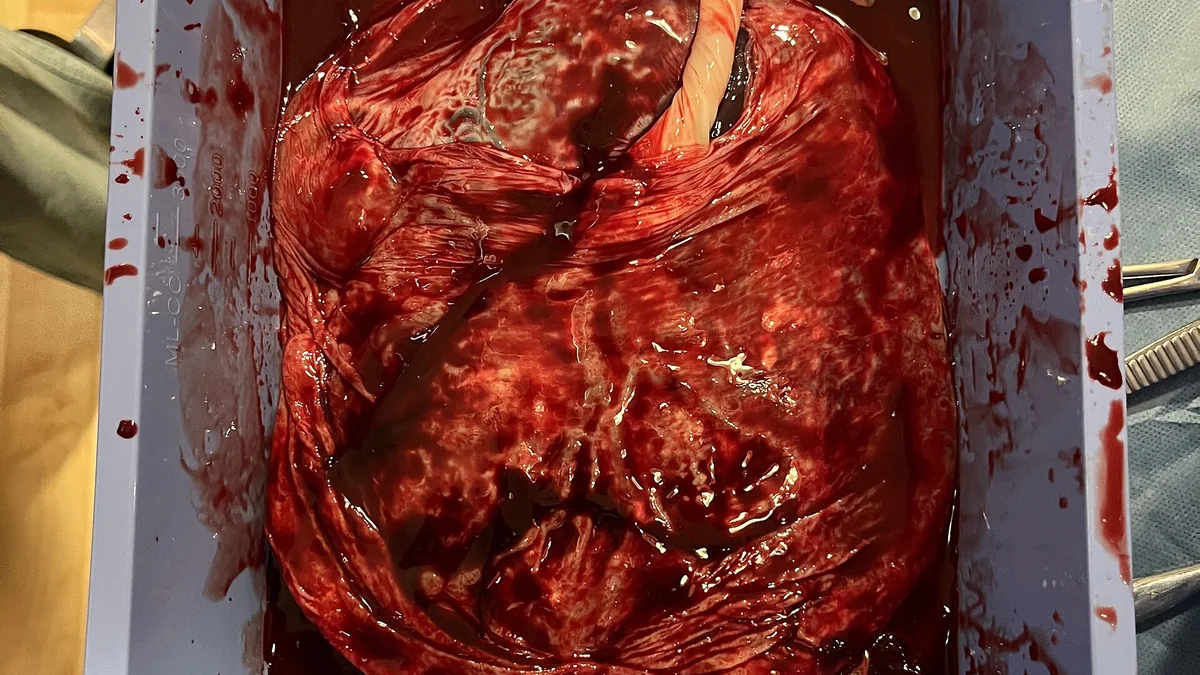
The placenta is a temporary organ that develops during pregnancy, attaching to the wall of the uterus and connecting to the developing baby via the umbilical cord. It exists only for the duration of pregnancy and is expelled from the body after childbirth.
A Vital Connection
The placenta serves as the interface between the mother's blood supply and the developing baby's blood supply, without the two ever directly mixing. Instead, the placenta's structure allows oxygen, nutrients, and other essential substances to pass from the mother's blood into the baby's blood, while waste products, including carbon dioxide, pass in the opposite direction, from the baby back to the mother for elimination.
Exchanging Nutrients and Oxygen
Within the placenta, a dense network of the baby's blood vessels sits in close contact with the mother's blood, separated by a thin membrane that allows substances to pass through while still keeping the two blood supplies separate. This arrangement allows a continuous, efficient exchange throughout pregnancy, supporting the baby's growth and development.
Producing Hormones
Beyond nutrient exchange, the placenta also functions as a temporary hormone-producing gland. It produces hormones that help maintain the pregnancy, including progesterone, which supports the uterine lining, and human chorionic gonadotropin, a hormone that plays a role in early pregnancy and is commonly detected by pregnancy tests.
Providing Protection
The placenta also acts as a selective barrier, offering the developing baby some protection from certain substances and organisms present in the mother's bloodstream, though it isn't a complete barrier, and some substances are still able to cross from mother to baby.
Background
Basic anatomical descriptions of the placenta date back centuries, but a detailed understanding of its specific role in nutrient exchange and hormone production developed considerably later, particularly through 20th-century advances in physiology and endocrinology. This research clarified the placenta's complex, multi-functional role, transforming it from a structure once viewed largely as passive tissue into one recognized as an active, essential organ throughout pregnancy.